
Greta Jung · 10 September 2026
Unlocking Agricultural Secrets: Digitized Ledgers Offer Glimpses into Century-Old Farming Practices
Projects across multiple regions now convert handwritten farm ledgers from the 1800s and early 1900s into searchable digital records, and these efforts reveal detailed patterns in crop selection, yield tracking, and seasonal labor allocation that shaped earlier agricultural economies. Historians and data analysts work together to process thousands of pages where farmers once recorded daily transactions, weather observations, and livestock movements, turning static documents into datasets that support comparative studies over time.
Contents of Historical Farm Records
Ledgers from that era typically list seed purchases alongside harvest quantities, note fertilizer applications, and track sales prices at local markets, while some entries include sketches of field layouts or comments on pest outbreaks that affected specific plots. One project in the American Midwest digitized volumes from 1875 to 1925 and found repeated references to rotation schedules that alternated corn with clover and wheat, patterns that modern analysts compare against contemporary soil health metrics. Similar collections from Canadian prairie provinces show parallel practices adapted to shorter growing seasons, with entries that document the purchase of draft animals and the timing of spring plowing relative to recorded frost dates.
European archives contribute additional layers, where French and German farm books from the same period record manure spreading intervals and companion planting combinations that supported nitrogen fixation without synthetic inputs. Researchers cross-reference these notes with regional weather station logs that began in the late 19th century, creating timelines that link precipitation variability to documented changes in acreage devoted to drought-tolerant varieties.
Digitization Methods and Analytical Tools
Teams first photograph each page under controlled lighting to preserve original ink and paper textures, then apply optical character recognition software tuned for cursive scripts common in that period before human reviewers correct transcription errors. Machine learning models subsequently tag recurring terms such as specific crop names or measurement units, enabling queries that aggregate data across dozens of farms. A collaborative effort involving institutions in Australia and New Zealand completed processing of over 12,000 ledger pages by mid-2025, releasing the first public database that allows users to filter results by decade, region, and commodity type.
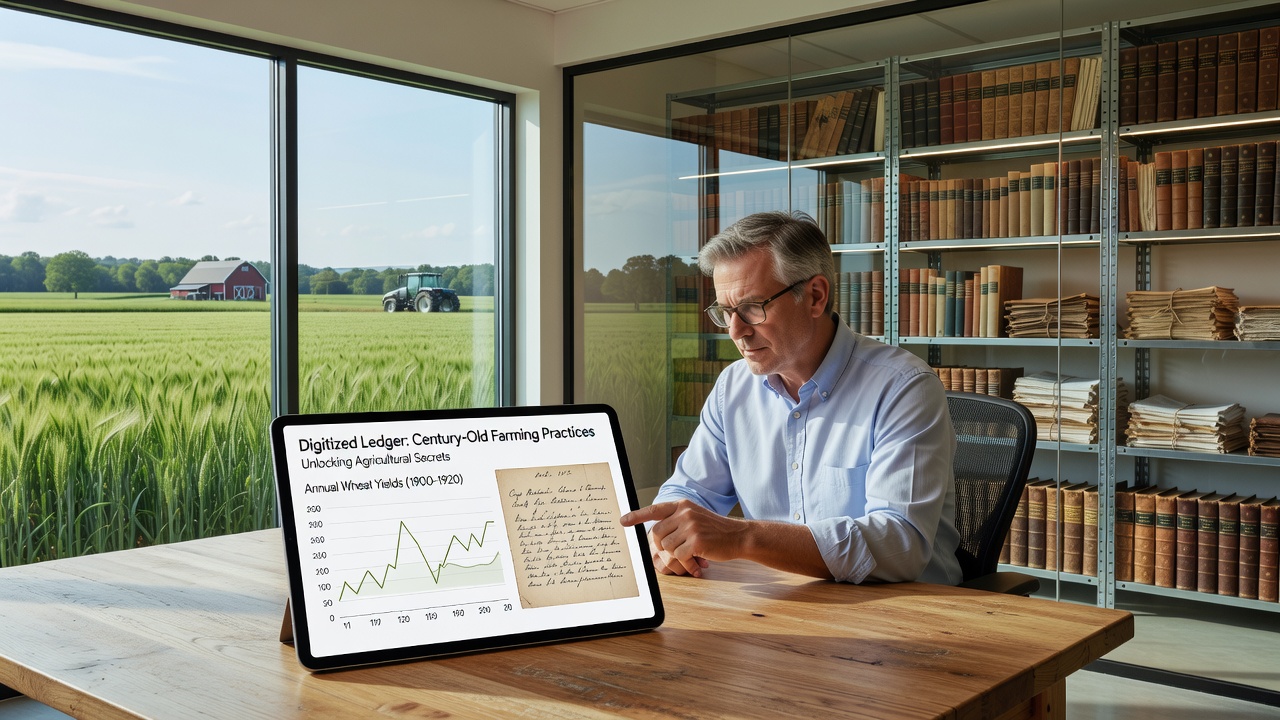
September 2026 marks the scheduled expansion of that database to include ledgers from additional districts in South Africa and Argentina, where records document early adoption of irrigation techniques in semi-arid zones. Analysts expect these additions to highlight regional adaptations that balanced water availability against market demands for wool and wheat exports during the same decades.
Insights into Sustainable Practices
Data extracted so far indicates that many farms maintained consistent yields across multi-year cycles by integrating livestock manure with legume cover crops, a combination that appears in entries from both North American and European sources. Figures from one digitized collection show average oat yields holding steady at 35 bushels per acre when farmers followed a four-field rotation, while deviations from that schedule correlated with noted declines in subsequent wheat harvests. Observers note that these patterns align with current recommendations from agricultural extension services that emphasize diversified rotations to maintain soil organic matter.
Additional findings point to labor allocation strategies that shifted seasonally, with peak hiring recorded during harvest windows that coincided with documented local festivals or market days. Such details help reconstruct rural economies where cash flow depended on timely sales rather than stored surpluses, and they provide baseline measurements for studies examining how mechanization later altered those calendars.
Broader Research Applications
Academic teams now integrate the ledger datasets with geospatial records to model historical land use changes, producing maps that overlay 19th-century field boundaries on present-day satellite imagery. According to reports from the Food and Agriculture Organization of the United Nations, these combined resources support assessments of long-term biodiversity trends in agricultural landscapes. A separate Canadian government initiative links similar ledger extracts to climate reconstructions, allowing comparisons between past drought responses and modern adaptation planning.
Industry groups focused on heritage seed preservation use the yield figures to identify varieties that performed reliably under low-input conditions, information that informs breeding programs aimed at climate resilience. Cross-border collaborations have already identified three wheat landraces mentioned consistently in both American and Australian records that exhibited stable performance during periods of recorded temperature extremes.
Conclusion
Digitized ledgers continue to expand the available evidence base for understanding how earlier farmers managed risk, maintained soil productivity, and responded to market signals within the constraints of their time. Ongoing additions scheduled through 2026 and beyond will further connect these historical datasets with contemporary agricultural challenges, supporting evidence-based approaches that draw directly from documented past practices.