Mara Krause · 8 October 2026
Digitized Agricultural Archives Inspire Utility Box Murals Showcasing Local Harvest Legacies
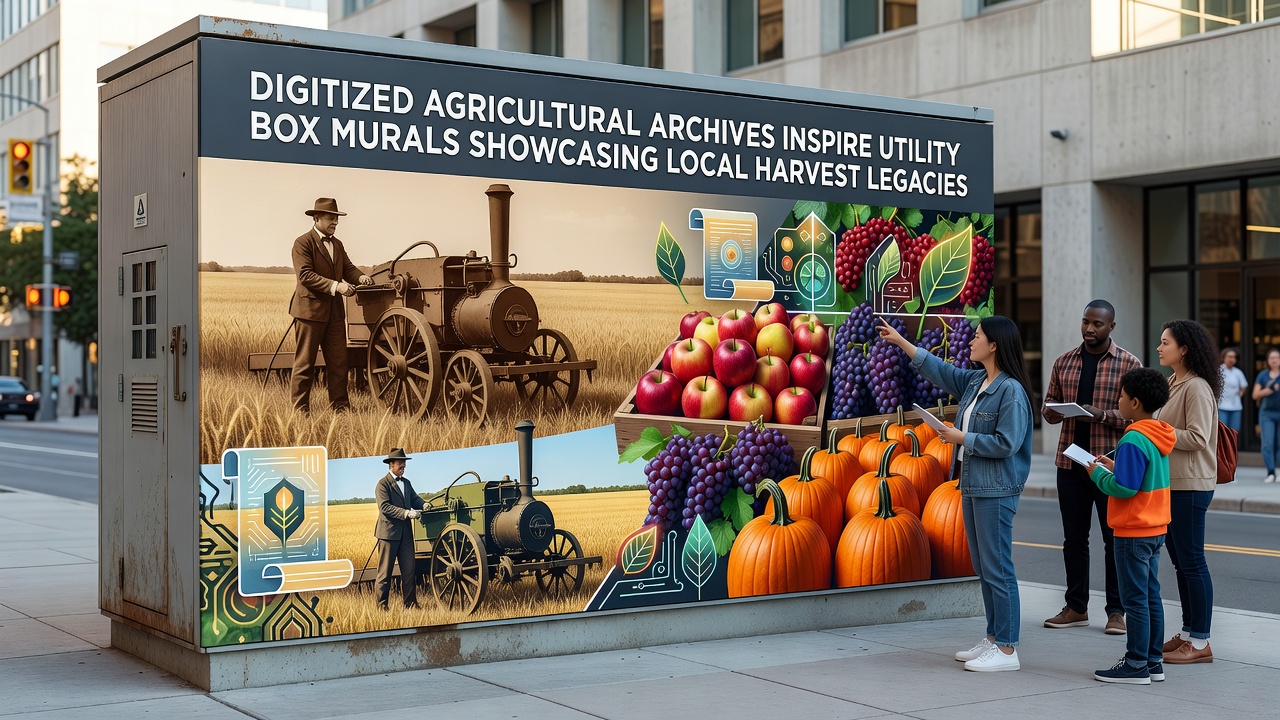
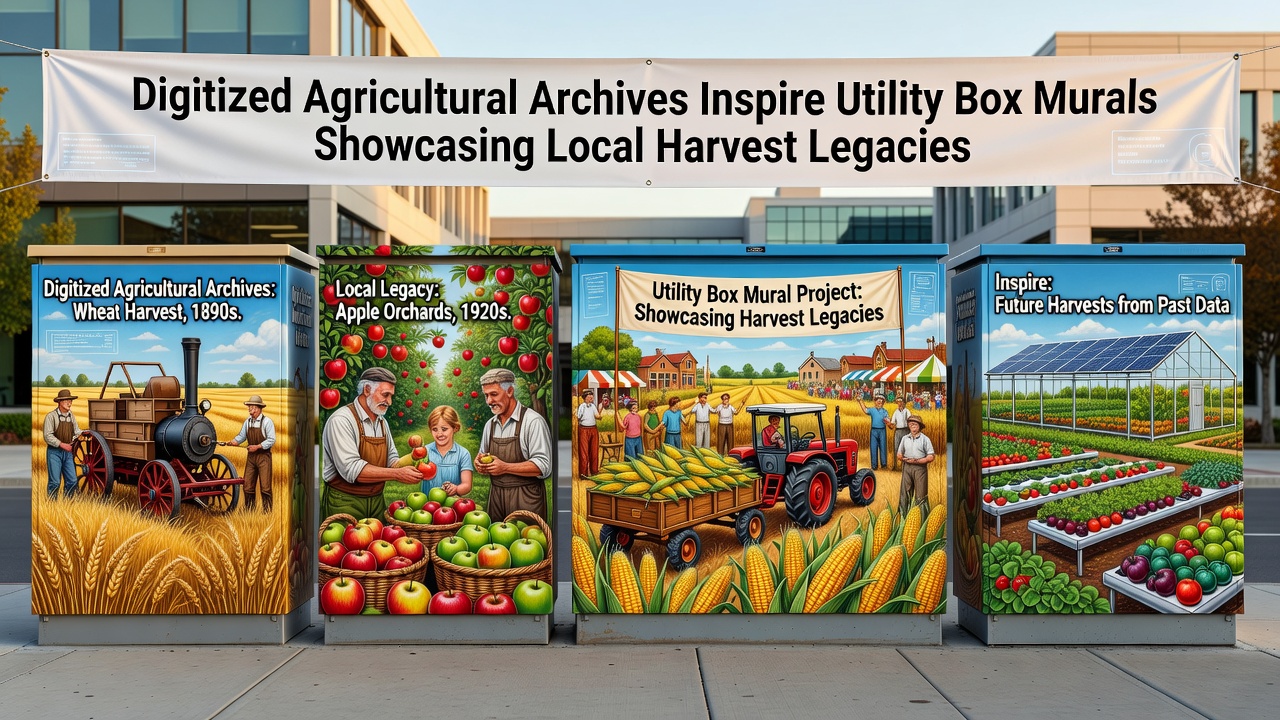
Communities across Birch Hill have turned to digitized agricultural archives as source material for murals painted on utility boxes throughout town, and these installations highlight crop yields, seasonal patterns, and farming techniques preserved in century-old records. The project draws directly from scanned ledgers and farm journals that detail everything from wheat harvests in the 1890s to apple orchard outputs during the early 1900s, while local artists translate the numerical data and handwritten notes into visual narratives on the metal surfaces of everyday infrastructure.
From Ledgers to Public Art
Archivists completed the digitization of regional farming documents in 2024, and the resulting database includes yield figures, weather annotations, and labor logs from more than two dozen properties in the Birch Hill valley. Artists accessed the open collection through a municipal portal, and they selected entries that showed peak production years for corn, potatoes, and berries to form the basis of each mural design. One panel on Main Street reproduces a 1912 ledger page that lists 47 bushels of barley per acre alongside sketches of horse-drawn reapers, while adjacent boxes feature color blocks representing soil types and rainfall totals pulled from the same datasets.
October 2026 Installations Expand the Series
City crews installed twelve additional murals in October 2026, and these new pieces focus on harvest legacies from the 1930s through the 1950s that were previously unavailable in digital form. Crews mounted the panels on utility boxes near the old rail spur and the community center, and each piece incorporates bar graphs and acreage maps rendered as stylized patterns rather than literal charts. Observers note that the October timing aligned with the annual agricultural fair, allowing residents to compare the murals against current produce displays and photographs of modern equipment.
Data Sources and Regional Comparisons
Researchers at the Australian Bureau of Agricultural and Resource Economics and Sciences have published similar digitization efforts that track historical wheat and livestock figures, and Birch Hill project coordinators referenced those methodologies when organizing the local collection. The Canadian Agriculture and Agri-Food Canada maintains parallel archives that include orchard data from the same decades, and those records supplied comparative context for color choices and scale in several Birch Hill murals. Project leads cross-checked local ledger totals against these external benchmarks to confirm accuracy before finalizing designs.
Community Involvement and Documentation
Local historical societies supplied family photographs that artists layered into the mural backgrounds, and volunteers transcribed marginal notes from the original documents to ensure the painted text matched the handwritten entries exactly. High school students documented the installation process through time-lapse videos, and the resulting footage shows crews aligning each panel with existing utility markings so that the artwork integrates with the box geometry rather than covering functional labels. Attendance at the October 2026 unveiling exceeded 400 residents, and participants received printed guides that map each mural location to the specific ledger pages that inspired it.
Preservation Outcomes
The murals have prompted renewed interest in the physical archives stored at the town hall basement, and researchers report increased requests for access to the original bound volumes since the public displays appeared. Maintenance crews apply a protective coating to the painted surfaces twice a year, and the coating preserves the pigments against weather while allowing the underlying metal to remain accessible for utility repairs. Data logs from the digitization project continue to expand as additional farm families donate records, and coordinators plan to incorporate the newest entries into future mural cycles scheduled for 2027.
Conclusion
The integration of digitized agricultural archives with utility box murals has created a distributed public record of Birch Hill harvest legacies, and the October 2026 additions demonstrate how ongoing digitization directly feeds new artistic interpretations. Residents encounter the same yield statistics and seasonal observations on their daily routes that once remained confined to ledger pages, and the project continues to link historical data with contemporary infrastructure in measurable, visual form.